

Estimated reading time: 11 minutes
Table of contents
- What Is a Nursing Home Medication Error?
- When Is a New Jersey Nursing Home Liable for a Medication Error?
- Can the Nursing Home Be Responsible for an Employee’s Mistake?
- What If the Doctor or Pharmacy Made the Medication Error?
- What Evidence Can Help Prove a Nursing Home Medication Error in NJ?
- Medication Errors in Nursing Homes Across New Jersey
- PR&A Law Secured a $750,000 Nursing Home Wrongful Death Settlement
- Compensation After a Nursing Home Medication Error
- Frequently Asked Questions About Nursing Home Medication Errors in New Jersey
- Contact a New Jersey Nursing Home Medication Error Lawyer Today
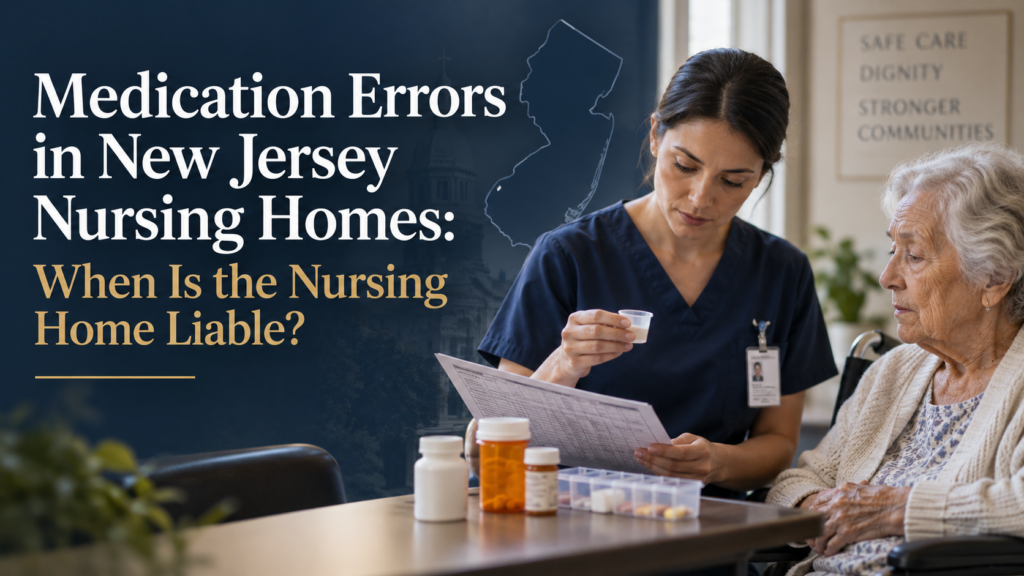
Family members of nursing home residents expect facilities to administer the correct medication, in the correct dosage, at the right time. For elderly residents with serious medical conditions, even a single medication mistake can cause significant harm, lead to hospitalization, result in permanent injury, or contribute to death.
Common nursing home medication errors can include giving a resident the wrong medication, administering the wrong dose, missing a required dose, or giving medication at the wrong time. Medication errors can also result from broader facility problems such as understaffing, inadequate staff training, poor communication, or inaccurate medication records.
When a medication error causes harm, the nursing home and other healthcare providers or entities whose negligence contributed to the error may potentially be held responsible.
Pellettieri Rabstein & Altman represents victims of nursing home neglect and abuse throughout New Jersey. If your loved one has suffered harm because of a medication mistake, speaking with a nursing home medication error lawyer can help you understand what happened, preserve important evidence, and determine whether you may have grounds for a legal claim.
What Is a Nursing Home Medication Error?
A medication error is a preventable event that may cause or lead to inappropriate medication use or patient harm while the medication is under the control of a healthcare professional, patient, or caregiver.
Common nursing home medication errors include:
- Giving a resident the wrong medication
- Administering medication intended for another resident
- Giving too much or too little medication
- Missing a required dose
- Giving medication at the wrong time
- Administering medication by the wrong route or method
- Continuing a medication that a physician discontinued
- Failing to start a newly prescribed medication
- Failing to follow medication instructions involving food or timing
- Failing to monitor a resident for adverse effects
Medication errors can be particularly dangerous for residents taking insulin, anticoagulants, heart medications, seizure medications, opioids, psychiatric medications, and other drugs that require careful dosing and monitoring.
When Is a New Jersey Nursing Home Liable for a Medication Error?
Not every medication error results in a successful negligence claim.
Liability generally depends on whether a nursing home, healthcare provider, pharmacy, or other responsible party failed to meet the applicable standard of care and whether that failure caused injury or harm to the resident.
Negligence by a nursing home may involve several different failures.
Inadequate Staffing
Administering medication safely requires time, attention, accurate documentation, and appropriate monitoring.
When there are not enough nurses or other qualified staff members available to care for residents, employees may be forced to rush through medication rounds or manage more residents than they can safely handle.
Understaffing can contribute to medication errors in several ways. A staff member may fail to record that a medication was administered, miss a required dose, administer the wrong dose, or fail to recognize symptoms of an adverse medication reaction.
Repeated medication mistakes may also indicate that what initially appears to be an isolated incident is actually part of a broader systemic problem involving staffing, supervision, or facility policies.
Improperly Trained Staff
Long term care facilities rely on employees who are responsible for administering medications, documenting medication use, monitoring residents, and recognizing possible side effects.
A nursing home may potentially be liable if it fails to adequately train employees responsible for medication administration or permits individuals who are not properly qualified or authorized to administer or monitor medications.
The facility may also be responsible when inadequate supervision allows medication mistakes to occur repeatedly.
Failure to Follow a Doctor’s Orders
Physician orders must be accurately communicated, documented, updated, and followed.
Potentially dangerous failures can include:
- Continuing an old dosage after a physician changes the prescription
- Failing to administer a newly prescribed medication
- Failing to discontinue a medication
- Giving medication more frequently than prescribed
- Administering the wrong dosage
- Failing to follow instructions requiring medication to be taken with food
- Failing to follow instructions regarding the timing of medication
New Jersey regulations governing long term care facilities contain detailed requirements for medication administration and pharmaceutical services.
Among other requirements, N.J.A.C. 8:39-29.2 addresses accurate medication administration and documentation according to prescribed orders. N.J.A.C. 8:39-29.3 addresses medication review, allergies, drug interactions, adverse reactions, medication errors, and related reporting requirements.
Failure to comply with medication orders and applicable safety requirements may be important evidence in a nursing home negligence case.
Poor Medication Records
Medication Administration Records, commonly known as MARs, can be critical evidence in a nursing home negligence case.
These records document which medications were administered, the dosage, the time of administration, and often the staff member responsible.
Incomplete or inaccurate records can create serious safety risks. For example, one employee may administer medication without properly documenting it. Another staff member may then incorrectly believe the medication has not been given and administer an additional dose.
Poor documentation can also contribute to missed doses, delayed medications, incorrect dosages, and difficulty determining exactly what happened after an adverse event.
Electronic records may provide additional information showing who created an entry, who modified it, when changes were made, and who accessed the record.
Failure to Monitor the Resident
Administering the correct medication is only part of safe medication management.
Some medications require ongoing monitoring for side effects, adverse reactions, or changes in the resident’s condition.
Depending on the medication, staff may need to monitor issues such as:
- Blood pressure
- Blood sugar levels
- Signs of bleeding
- Kidney function
- Changes in mental status
- Sedation or confusion
- Allergic reactions
- Changes in mobility or balance
A failure to recognize warning signs, notify a physician, or obtain appropriate medical treatment after an adverse reaction may cause serious injury and potentially result in liability.
Failure to Prevent Dangerous Drug Interactions
Many nursing home residents take multiple prescription medications for several different health conditions.
Facilities and healthcare professionals should have systems in place to identify allergies, contraindications, duplicate therapies, potentially dangerous drug interactions, and other medication risks.
Failures involving medication review or communication between physicians, nurses, pharmacies, and other healthcare providers can expose vulnerable residents to preventable harm.
Can the Nursing Home Be Responsible for an Employee’s Mistake?
In many situations, yes.
A nursing home may be held responsible for negligent acts committed by employees while they are performing duties within the scope of their employment.
A facility may also face direct liability for its own negligent policies, practices, or management decisions.
An investigation may reveal failures involving:
- Hiring
- Employee training
- Staffing
- Supervision
- Medication management policies
- Quality control
- Recordkeeping
- Communication between shifts
- Communication with physicians
- Communication with pharmacies
A nursing home medication error lawyer can investigate whether a mistake was an isolated incident or the result of broader problems involving staffing, training, supervision, documentation, or facility procedures.
What If the Doctor or Pharmacy Made the Medication Error?
Not every medication error is solely the fault of the nursing home.
Depending on how the mistake occurred, potentially responsible parties may include:
- A nurse or other healthcare provider
- A prescribing physician
- A pharmacy
- A pharmacist
- A nursing home facility
- A management company or corporate nursing home operator
- Multiple parties whose combined errors contributed to the injury
For example, a physician might prescribe an inappropriate dosage, a pharmacy might dispense a medication incorrectly, or nursing home staff might administer medication incorrectly even though the physician’s order and pharmacy dispensing information were accurate.
In some cases, several mistakes may occur at different points in the medication process.
A thorough investigation can help determine where the error occurred and which parties may be legally responsible.
What Evidence Can Help Prove a Nursing Home Medication Error in NJ?
Medication error cases are often highly dependent on medical records and facility documentation.
Potential evidence may include:
- Medication administration records
- Electronic medication records
- Physician orders
- Pharmacy dispensing records
- Prescription changes
- Nursing notes
- Incident reports
- Hospital and emergency room records
- Staffing records
- Training records
- Internal policies and procedures
- Communications between physicians, nurses, and pharmacies
Electronic records may also contain audit information showing when records were created, modified, or accessed.
An attorney may also work with experts in nursing, medicine, pharmacy, or long term care to evaluate whether the facility or healthcare provider failed to meet applicable standards of care and whether that failure caused the resident’s injuries.
Families should not assume that the facility’s initial explanation tells the entire story. A review of medication records, physician orders, pharmacy records, nursing notes, staffing information, and other evidence may reveal how and why an error occurred.
Medication Errors in Nursing Homes Across New Jersey
Medication safety affects nursing home residents and families throughout New Jersey.
PR&A represents clients across Mercer County, Burlington County, Camden County, Morris County, Essex County, Middlesex County, and communities throughout the state.
The firm has New Jersey offices serving clients from Lawrence Township, Trenton, Cherry Hill, Morristown, Nutley, and surrounding communities in Northern, Central, and Southern New Jersey.
Nursing home negligence cases may involve medication errors as well as falls, pressure sores, infections, understaffing, inadequate medical care, and other forms of neglect or abuse.
New Jersey nursing homes are subject to the Nursing Home Responsibilities and Rights of Residents Act as well as state and federal regulations establishing standards for resident care.
N.J.S.A. 30:13 and N.J.A.C. 8:39 are among the New Jersey laws and regulations governing nursing homes and long term care facilities in the state.
PR&A Law Secured a $750,000 Nursing Home Wrongful Death Settlement
The consequences of medication deprivation can be devastating.
PR&A Law secured a $750,000 settlement in a nursing home wrongful death case involving the failure to administer a resident’s required medication.
According to the firm’s case result, the resident’s death was caused by the failure to provide the required medication. The case was resolved before trial.
Every case depends on its own facts, and past results do not guarantee a similar outcome in another matter.
However, serious medication errors should be investigated thoroughly to determine why they occurred and whether they could have been prevented.
Nursing homes may describe a missed dose as a simple mistake or accident. Families have the right to ask additional questions, including whether similar errors occurred previously and whether the facility had appropriate policies, staffing, training, and safeguards in place.
Compensation After a Nursing Home Medication Error
Compensation in a nursing home negligence case depends on the nature and severity of the harm caused by the medication error.
Potential damages may include compensation for:
- Additional medical treatment
- Hospitalization
- Rehabilitation
- Pain and suffering
- Permanent impairment
- Loss of quality of life
- Other financial losses resulting from the injury
If a resident dies as a result of a medication error, the appropriate personal representative of the deceased may be able to pursue wrongful death and survival claims against responsible parties under New Jersey law.
The damages available depend on the facts of the case and the legal claims involved.
Frequently Asked Questions About Nursing Home Medication Errors in New Jersey
Q: The nursing home gave my loved one the wrong medication. Can I sue the facility?
A: Potentially. A negligence claim depends on the circumstances surrounding the medication error, whether the facility or another healthcare provider failed to meet the applicable standard of care, and whether that failure caused injury or harm to your loved one.
Q: Is a missed medication considered nursing home neglect?
A: It can be. A failure to administer prescribed medication may constitute nursing home neglect depending on the circumstances. Possible causes can include inadequate medication management, understaffing, lack of training, poor documentation, communication failures, or other deficiencies in care.
Q: What happens if a nursing home gives a resident too much medication?
A: An excessive dose can cause serious side effects depending on the medication and the resident’s medical condition. Potential consequences can include severe illness, organ damage, changes in consciousness, breathing problems, bleeding, falls, or death.
A suspected overdose should be treated as a medical emergency and evaluated promptly by appropriate healthcare professionals.
Q: Can a nursing home be liable for failing to monitor medication side effects?
A: Potentially. Safe medication management can include monitoring residents for known side effects and adverse reactions. If staff members fail to recognize concerning symptoms, fail to report them to a physician, or fail to obtain appropriate medical attention, the facility may potentially be liable if the failure causes harm.
Q: What documents may be important after a medication error?
A: Important records may include Medication Administration Records, physician orders, nursing notes, care plans, lab results, pharmacy records, incident reports, hospital records, medication changes, and other documentation relating to the resident’s treatment.
An attorney may obtain additional facility records, staffing documents, electronic audit information, and internal policies when appropriate.
Q: How can a nursing home medication error lawyer in NJ help?
A: A nursing home medication error lawyer can investigate what happened, obtain and review relevant records, identify potentially responsible individuals or entities, consult with appropriate experts, evaluate the extent of the resident’s injuries, and determine what legal claims may be available.
Contact a New Jersey Nursing Home Medication Error Lawyer Today
Medication errors can change a nursing home resident’s health in a matter of minutes.
Families deserve clear answers when a loved one becomes seriously ill, requires hospitalization, suffers a permanent injury, or dies after receiving the wrong medication, an incorrect dose, or failing to receive medication that was prescribed.
Our attorneys investigate alleged nursing home negligence, abuse, and medication errors to determine what happened and who may be responsible. That investigation may include reviewing the resident’s medical records, Medication Administration Records, physician orders, pharmacy records, staffing information, and other relevant evidence.
For decades, PR&A Law has represented injured people and families throughout New Jersey in nursing home negligence and other serious personal injury matters.
If your loved one has been harmed by a nursing home medication error in NJ, contact the experienced nursing home abuse attorneys at Pellettieri Rabstein & Altman for a free consultation. There is no fee unless we recover compensation for you.


