

Estimated reading time: 7 minutes
Table of contents
When a loved one is placed in a nursing home, families depend on the nursing home to provide the best care to ensure their safety and well-being. While many nursing homes meet the high standards of care that families expect, others do not. When nursing home neglect or abuse results in the death of a resident, surviving family members are left to deal with their grief and the unanswered questions of who was responsible for their loved one’s death and how they can ensure that everyone responsible is held accountable.
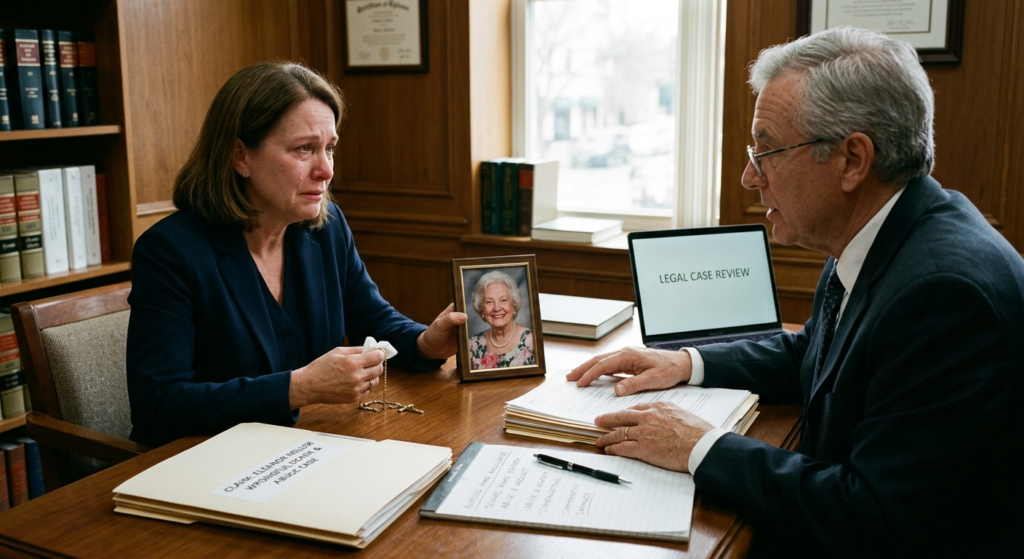
At Pellettieri Rabstein & Altman, we have decades of experience representing families of persons who were abused or neglected in nursing homes and who have passed away as a result of such abuse or neglect. Our five offices, located in Cherry Hill, Morristown, Trenton, Nutley and Lawrence Township, allow us to represent families from all parts of New Jersey.
What Is a Wrongful Death Claim in a Nursing Home?
A wrongful death lawsuit is brought by the estate of a person who has been wrongfully killed due to another party’s negligence or intentional misconduct. In a nursing home setting, a wrongful death lawsuit can be filed against a facility after the death of a resident due to the nursing home’s failure to meet their duties of care to that resident.
Some of the more common wrongful death claims in nursing homes arise from the following:
- Untreated pressure ulcers (bedsores) that progress to life-threatening infections
- Medication errors – including overdoses, wrong medications, or complete deprivation of necessary drugs
- Falls due to inadequate supervision leading to fatal head injuries or internal bleeding
- Malnutrition and dehydration from failure to provide adequate nutrition
- Delayed or denied medical treatment when urgent symptoms were ignored
- Physical abuse by staff members or other residents
Under New Jersey law, nursing homes have a duty to protect their residents from harm. Regulations set forth by the federal government under 42 C.F.R. § 483.12 set out the duties of nursing homes to protect residents from abuse, neglect and exploitation. A wrongful death lawsuit can be one of the most effective means of seeking justice and accountability when a nursing home fails in its duty to protect a resident and that resident ultimately dies as a result of that failure.
How Wrongful Death Claims Differ From Standard Nursing Home Abuse Claims
New Jersey Wrongful Death Claims are governed by the New Jersey Wrongful Death Act (N.J.S.A. 2A:31-1 et seq.). These types of claims are brought by certain family members on behalf of the estate of the deceased nursing home resident. Typically, claims are brought by the spouse of the deceased, children of the deceased, or other dependents of the deceased.
The types of compensation available in a wrongful death claim are:
- Funeral and burial expenses
- Medical costs incurred in the period leading up to the death
- Loss of financial support the deceased would have provided
- Loss of companionship, guidance, and services to surviving family members
- Pain and suffering experienced by the resident before death (filed as a survival claim alongside the wrongful death claim)
One important distinction: in a wrongful death case, the damages are calculated based on the loss experienced by the survivors, not just the individual who passed. This can meaningfully expand the compensation available compared to a standard negligence claim.
The Survival Claim: Recovering for Your Loved One’s Suffering
In nursing home wrongful death cases in New Jersey, it is also possible to bring a survival claim, on behalf of the estate of the deceased resident. The estate is able to recover for the pain and suffering, and for the medical expenses incurred by the resident as he or she was dying, prior to death.
For example, if a resident suffered for weeks with an untreated infection that progressed to sepsis and then ultimately to the resident’s death, the survivor claim would seek to recover the pain and suffering and medical expenses incurred by that resident for the weeks prior to his or her death. The wrongful death claim would then seek to recover for the loss to the family as a result of that resident’s death.

In cases involving reckless or intentional misconduct, such as deliberate abuse or systematic concealment of neglect, New Jersey courts may also award punitive damages, compensation meant to punish the facility, and deter future wrongdoing. Our attorneys at PR&A Law have successfully recovered punitive damages in cases where nursing homes exhibited extreme disregard for resident safety.
Why Acting Quickly Matters in New Jersey
New Jersey law generally requires a wrongful death claim to be brought within two years of the date of death. Even the strongest of cases will be barred by statute if the two year period passes. It is also very important to preserve key documentation as soon as possible after a resident’s death, including but not limited to:
- staffing logs
- care plans
- medical charts
If you believe that your loved one could have been saved from death at a New Jersey nursing home, you should contact an attorney immediately.
Frequently Asked Questions
Q: Who can file a wrongful death claim after a nursing home death in New Jersey?
A: An action for wrongful death is brought by the decedent’s estate by the administrator or the executor of the decedent’s estate. Compensation received by the estate is distributed to certain family members including a spouse, children and parents of the deceased, all based upon their degree of financial dependence.
Q: I have a loved one who recently passed away from neglect at a nursing home. The individual had a history of severe health problems prior to entering the facility. Can I file a wrongful death claim?
A: Yes. Even though the individual was elderly and suffered from prior health problems, it does not mean that the nursing home is not liable for the individual’s death. If the facility was negligent in the care and treatment of the individual and that negligence either accelerated the individual’s death or caused the individual to suffer greatly prior to death, then you can file a claim for wrongful death on behalf of the individual’s estate.
Q: What evidence is required to prove a nursing home wrongful death case?
A: We require medical records that disclose the increasing extent of injury and/or illness of a nursing home resident, plus staffing records, incident reports, care plans and often the testimony of a medical expert who explains how a nursing home caused a death.
Q: How long will it take to take a nursing home wrongful death action in New Jersey?
A: It is difficult to forecast how long it will take to handle a matter of this nature. Matters often can be resolved and settled within months. However, others require a year or more of time. A practitioner can give you a better assessment of where your case is and where it may be going.
Q: Does filing a Wrongful Death lawsuit mean that a trial will follow?
A: No. The majority of our wrongful death / survival actions are resolved by settlement prior to trial. However, it is critical to have experienced and qualified attorneys who are prepared to litigate in order to secure the best possible settlement on behalf of a client and their family.
Q: How much does it cost to hire a nursing home wrongful death attorney at PR&A Law?
A: At Pellettieri Rabstein & Altman, we handle nursing home abuse and wrongful death cases on a contingency fee basis, meaning there are no upfront costs. We only collect a fee if we successfully recover compensation for your family.
New Jersey Families Deserve Answers and Justice
Nursing homes in New Jersey communities such as Cherry Hill, Trenton and Morristown are responsible for providing a certain level of care and dignity to their residents. When a nursing home fails in that responsibility and the resulting lack of care causes the death of a resident, the family of the deceased can seek to hold accountable the party responsible for the nursing home’s failure.
At Pellettieri Rabstein & Altman, we have decades of experience representing families in nursing home abuse and wrongful death cases. We thoroughly and aggressively investigate each case to work to achieve the best results possible for our clients.
If your loved one died in a New Jersey nursing home under circumstances you believe were preventable, contact us today for a free case evaluation.


