

Estimated reading time: 14 minutes
Table of contents
- Why Are Nursing Home Records Important in a New Jersey Neglect Case?
- 1. Medical Charts and Nursing Notes
- 2. Nursing Home Care Plans and Risk Assessments
- 3. Staffing Records and Employee Schedules
- 4. Medication Administration Records and Physician Orders
- 5. Incident Reports and Internal Facility Documentation
- 6. Hospital Records, Emergency Room Reports, and Medical Imaging
- 7. Inspection Reports, Complaints, and Prior Violations
- 8. Surveillance Footage, Photographs, and Witness Statements
- 9. Electronic Medical Record Audit Trails
- How Can Families Obtain Nursing Home Records in New Jersey?
- Frequently Asked Questions About Nursing Home Neglect Evidence in New Jersey
- Contact a New Jersey Nursing Home Neglect Attorney at PR&A Law
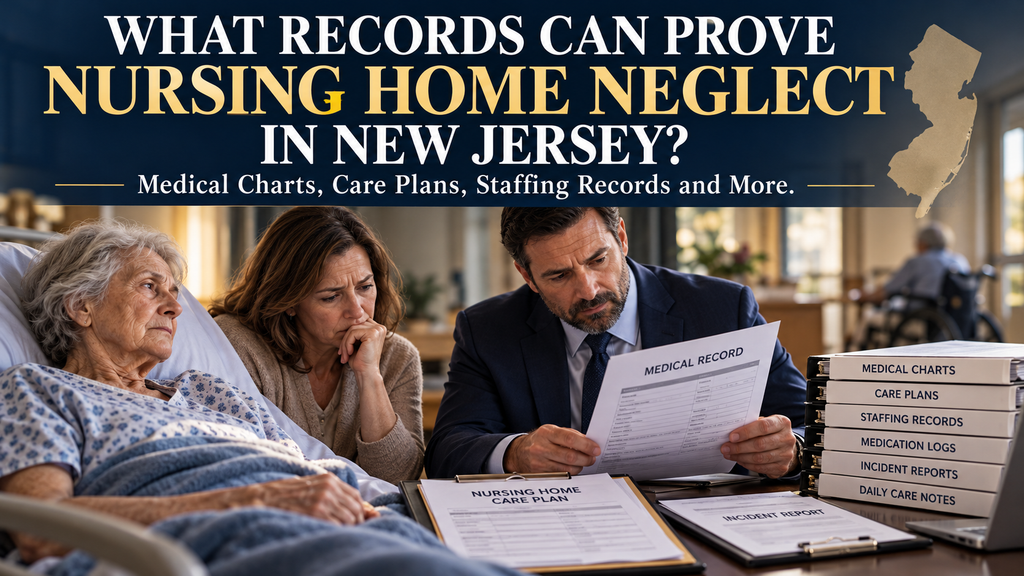
An unexpected injury to a loved one, severe untreated bedsores, or a sudden decline in health can leave families searching for answers about what went wrong. While nursing home administrators may offer an explanation, their account may not reveal the full circumstances surrounding the incident or whether neglect or inadequate care played a role.
Medical charts, nursing notes, care plans, staffing records, medication administration records, and incident reports can provide important evidence when investigating suspected nursing home neglect. These documents may reveal whether staff properly assessed a resident’s needs, followed established care plans, and responded appropriately to changes in the resident’s condition. Reviewing these documents will disclose whether or not the staff is addressing a resident’s needs and adhering to the plan of care for that resident, and whether or not they respond properly to signs of weakness or illness.
At Pellettieri Rabstein & Altman, we are a group of experienced lawyers who have been representing the injured and the families of the injured in nursing homes for decades. We are one of New Jersey’s oldest and most respected law firms, with a history dating back to 1929.
First, identify the relevant documents, obtain them and understand their content.
Why Are Nursing Home Records Important in a New Jersey Neglect Case?
Nursing homes assess the needs of their residents, set up appropriate care for them, assist them as needed, and keep records of all care given to residents.
The medical records at the facility where your loved one resided can provide important evidence to answer several key questions regarding the negligence of the staff and administration at the facility where your loved one resided.
- Were the resident’s fall risk, skin breakdown risk, etc. identified by staff?
- Was an appropriate care plan developed and updated?
- Were employees following the care plan as documented?
- Were there sufficient qualified staff to provide the appropriate care to residents?
- Were medications administered according to physician orders?
The absence of one chart is not negligence; however, the inconsistencies found in the medical records, care plans, and documentation of staff’s activities can lead to the determination of whether negligence occurred.
An experienced New Jersey nursing home abuse attorney can examine these documents to identify potential violations of accepted professional standards, and with the aid of medical experts, determine if the resident’s injuries were a result of negligent care.
1. Medical Charts and Nursing Notes
Medical charts are some of the most critical pieces of information used in investigating alleged neglect of nursing home residents.
The bulk of information about a resident’s medical problems, treatment, vital signs, physician orders and change in status is contained in the resident’s medical chart.
Nursing notes may include observations about:
- Pain, swelling, bruising, or unexplained injuries
- Changes in mobility or mental status
- Skin breakdown and pressure ulcer development
- Weight loss, dehydration, or nutritional concerns
- Falls and other accidents
- Notifications to physicians and family members
How Medical Charts Can Reveal Neglect
A sample case of a resident who developed severe pressure sores would be an excellent example.
The resident’s medical chart may reflect that the staff had identified early signs of skin irritation but failed to record or implement timely and adequate treatment or subsequent care of worsening wounds.
For example, the chart may repeatedly note that a wound is getting worse but no changes to the resident’s care are documented.
The medical records provide evidence as to whether the employees responsible for the resident’s care identified the problem, reported it appropriately and took adequate steps to prevent further harm. Medical charts can track a chain of events that led to harm that a nursing home resident suffered as a result of their neglect.
For additional information, read our article: Can You Sue a Nursing Home for Bedsores in New Jersey?
2. Nursing Home Care Plans and Risk Assessments
Each nursing home resident has unique medical, physical and personal care needs. Nursing homes must assess the needs of their residents and develop an individualized plan of care for them.
A resident’s care plan may address:
- Fall prevention and mobility assistance
- Pressure ulcer prevention
- Medication management
- Nutrition and hydration
- Personal hygiene
- Dementia-related supervision
- Assistance with bathing and dressing
- Wound care and infection prevention
- Physical and occupational therapy
Resident rights in nursing homes are detailed in the State of New Jersey regulations regarding residents’ rights, including the right to participate in and review individualized care plans, as well as the right to have care plans revised as needed at the resident’s request. New Jersey Long-Term Care Ombudsman guidance explains these protections.
What Happens When Staff Ignore a Care Plan?
For example, a resident may be identified as being at risk of falls and requiring assistance for transfers (e.g., from a wheelchair to a bed) as part of his or her care plan.
If the resident suffers a fall during a transfer (such as from a wheelchair to a bed), then the resident’s care plan and nursing documentation can establish whether or not employees followed the best methods to prevent such a fall and whether or not employees followed the resident’s care plan.
An attorney will compare the resident’s written care plan with the nursing notes, the staff assignments for the time of the incident and the contents of the incident reports to see if the necessary assistance was given.
Learn more: When Is a Nursing Home Liable for a Resident’s Fall in New Jersey?
3. Staffing Records and Employee Schedules
Understaffing at a nursing home can lead to many issues, including missed medications, delayed response to calls for assistance, and a lack of proper supervision of residents and staff. Staffing documents can be used to demonstrate whether or not a facility had an adequate number of qualified staff to meet the needs of its residents.
- Important records may include:
- Daily staffing schedules
- Nurse and certified nursing assistant assignments
- Overtime and shift coverage records
- Staff training and qualification documentation
How Staffing Records Can Support a Negligence Claim
Nursing homes frequently defend themselves by saying that their staff were checking in on residents from time to time and providing assistance when needed.
However, staffing records for the shift may indicate that fewer employees than anticipated were on duty or that the caregivers assigned to the resident had responsibility for a large number of other residents. Staffing records can be compared with residents’ medical records and their individualized care plans as well as with employees’ accounts of what occurred.
New Jersey requires nursing homes and assisted living facilities to report information regarding their direct care staffing on an annual basis and to publicly display staffing information. Information regarding nursing home staffing is published by the New Jersey Department of Health on a quarterly basis. Meeting minimum staffing requirements does not necessarily mean that adequate care was provided; rather, consideration must be given to the needs of residents as well as the circumstances surrounding the incident in question.
Families can review this information through the New Jersey Department of Health Nursing Home Staffing Resources.
4. Medication Administration Records and Physician Orders
Mistakes with medications can have serious consequences for elderly patients residing in nursing home facilities. Medication errors are documented on a Medication Administration Record (MAR) during the process of administering the medications to the residents. These records can be compared with the orders written by the physicians and with the pharmacy records and other medical information.
An attorney investigating possible medication neglect may examine:
- Medication Administration Records (MARs)
- Treatment Administration Records (TARs)
- Physician prescriptions and orders
- Pharmacy dispensing records
- Medication changes and discontinuation orders
What Can Medication Records Reveal?
Medication records may help identify whether a resident:
- Received the wrong medication
- Was given an incorrect dosage
- Missed prescribed medication
- Received medication at an improper time
- Experienced an adverse reaction that was not addressed
- Was not properly monitored following a medication change
When a resident suffers complications after failing to receive prescribed medication, an attorney can review physician orders, medication administration records, and other documentation to determine whether the medication was properly administered.
These discrepancies can determine whether or not an error occurred as well as who is at fault. PR&A Law has handled numerous cases of serious neglect or harm to nursing home residents in relation to their medication including a wrongful death case that settled for $750,000.
Read more: Medication Errors in New Jersey Nursing Homes: When Is the Nursing Home Liable?
5. Incident Reports and Internal Facility Documentation
An incident report is often created by a nursing home when a resident experiences a fall or other injury, or when some other unusual event occurs.
Such reports may describe:
- The date and time of the incident
- Where the incident occurred
- Employees involved
- Witness statements
- The resident’s condition
- Immediate medical treatment
Incident reports are useful when compared with other documentation such as nursing notes.
For example, the incident report may state that a resident was found on the floor, while the corresponding nursing notes will detail the events leading up to that finding.
The discovery of discrepancies does not automatically establish wrongdoing but rather raises issues that need to be further investigated.
Some of the documents generated by a facility’s investigation into an incident may be privileged or subject to other confidentiality protections. The documents that can be obtained through appropriate legal procedures are determined by an attorney.
6. Hospital Records, Emergency Room Reports, and Medical Imaging
Records from hospitals and other healthcare providers can also be very important to have. Often there is additional documentation of a resident’s medical problems while at the nursing home.
These records may include:
- Emergency room evaluations
- Hospital admission and discharge summaries
- X-rays, CT scans, and MRI reports
- Surgical records
- Wound assessments
- Physician consultations
An incident might be reported as a simple ‘minor fall,’ but records may in fact reveal the resident suffered a serious injury such as a fracture or even a head injury.
Examples of information in hospital records that would identify a decline in the resident’s condition and reveal the cause of that decline include indications of dehydration, malnutrition, an advanced infection, or pressure sores.
An attorney can then compare information from nursing home records with information from hospital records to determine when an injury occurred and whether the resident’s nursing home care caused the injury.
7. Inspection Reports, Complaints, and Prior Violations
The long-term care nursing homes in New Jersey are regulated by the State of New Jersey and the Federal Government.
Inspection reports and documented instances of regulatory violations reveal instances of non-compliance by nursing home facilities and their past problems.
These records may identify concerns involving:
- Insufficient staffing
- Infection control failures
- Medication administration practices
- Inadequate resident supervision
- Improper wound care
Prior citations for the same type of problem that a nursing home had before may or may not be probative in a particular case. Prior problems of a nursing home and their resulting citations are made public by state and federal governments and investigated by families of nursing home residents and their attorneys through New Jersey’s long-term care oversight resources.
8. Surveillance Footage, Photographs, and Witness Statements
Not all valuable evidence is contained in medical records.
Evidence can come from many places including photographs, videos and written statements from people who actually observed the resident’s decline.
Useful evidence may include photographs documenting bedsores or other injuries, bruising and swelling, unsafe living conditions, unsanitary bedding or clothing, mobility hazards, or deteriorating physical conditions.
Witnesses can be visiting family members or other residents as well as nursing assistants, nurses and even former and current employees of a facility.
Video evidence, such as surveillance footage, may also be important to identify incidents of resident falls or alleged abuse. Families should act fast since facilities have retention practices for video recordings that may delete or overwrite them after a short period. Your attorney will take the necessary steps to preserve such footage and related documentation.
9. Electronic Medical Record Audit Trails
Nursing homes that are using health information technology to maintain their residents’ electronic health records, in addition to their paper charts, have audit information in the electronic health information system that identifies who created information, modified information or accessed information.
For example, an investigation may seek to determine whether a nursing note was written at the time of care or added later.
A late entry to a record is not in itself evidence of fraud or falsification. However, such entries and their associated electronic timestamps, correction notes, etc. can be reviewed by an expert in audit trail matters to form a conclusion as to whether or not such entries were appropriately included in a record.
The availability and access to records in nursing homes depends on the technology, on the procedures for the preservation of records and on the legal requirements.
How Can Families Obtain Nursing Home Records in New Jersey?
New Jersey long-term care residents have rights in regard to their personal records and medical treatment information.
Residents have the right to access their information in the format of their choice (e.g. printed out or on CD). Families should also follow these steps to request information from nursing homes.
- Request a copy of the resident’s complete medical chart. Typically, this would cover the period prior to, during, and after the alleged neglect.
- Request care plans and assessments for the resident to demonstrate what care the facility was supposed to provide for the resident’s health, safety and welfare.
- Seek out all records of the resident’s medication and treatment, as well as documentation of when each prescribed treatment was administered.
- Preserve all communication. Save all emails, letters, etc. that you have sent to the facility and keep a record of all messages, whether left on an answering machine or with staff.
- Also consider that documents like the nursing home’s staffing schedules, internal reports, and audit trails may need to be obtained through formal legal process and that your attorney can help with this as well.
While residents have access to their medical information, family members do not automatically have a right to access another person’s private medical information. However, family members have the right to obtain information regarding a resident if they have valid written authorization, or if the resident is under their guardianship or has designated them as a personal representative.
An experienced attorney handling nursing home negligence cases can help you know what information you can request and what information can be obtained in a lawsuit.
Frequently Asked Questions About Nursing Home Neglect Evidence in New Jersey
Q: What is the strongest evidence of nursing home neglect?
A: Depending on the nature of neglect, such as under-treatment of illness, evidence may consist of medical charts, resident care plans, nursing notes, staffing schedules, hospital records and photographs. Additionally, written statements from eye-witnesses, documentation of administration of medications, and the testimony of experts will be used to prove neglect and show resident injury.
Q: Do family members have a right to nursing home medical records in New Jersey?
A: Yes, when he or she has appropriate legal authority to do so. A resident and/or his/her authorized representative has the right to obtain his/her medical records. However, simply being a family member of a resident does not automatically entitle him/her to confidential information regarding said resident.
Q: Can staffing records help prove nursing home negligence?
A: Yes. Information relating to staffing such as staff schedules, employees assigned to residents, and payroll information for nursing home staff can establish whether a nursing home was understaffed or failed to properly supervise employees and others who have contact with residents.
Q: What if a nursing home refuses to provide records?
A: Your documentation of the request and facility’s response to the request for records will determine the best course of action for you. Many facilities have internal procedures for business records which may require formal discovery in a litigation.
Q: Can a nursing home change medical records after an injury?
A: Changes or corrections to medical records can be made through proper documentation procedures. However, changed or deleted records can give rise to serious allegations of negligence or even illegal activity. An audit trail, a record of changes to a record, as well as a record history, could be used to establish whether improper documentation occurred.
Contact a New Jersey Nursing Home Neglect Attorney at PR&A Law
If a loved one has suffered from an injury while residing at a New Jersey nursing home, information from the nursing home and your loved one’s medical treatment will be essential to determine what exactly happened.
The nursing home negligence attorneys at Pellettieri Rabstein & Altman can evaluate the circumstances surrounding a nursing home resident’s serious injury, identify relevant evidence and seek to preserve critical documents and records.
Whether your loved one suffered from a serious fall, developed pressure sores, suffered from errors in medication administration, developed an untreated infection or in some other way was denied necessary care and suffered injury as a result, we can discuss your concerns with you.
If you have questions about nursing home negligence, contact PR&A Law online for a free consultation. We serve clients from our offices in Lawrence Township, Cherry Hill, Nutley, Morristown and throughout New Jersey.


