

Estimated reading time: 15 minutes
Table of contents
- What Is the Difference Between Elder Law and Nursing Home Neglect Law?
- When Does a Nursing Home Injury Become a Neglect Case in New Jersey?
- New Jersey Laws Protecting Nursing Home Residents
- Common Nursing Home Injuries That May Require Legal Action
- Nursing Home Neglect Cases in Trenton, Cherry Hill, Morristown, and Throughout New Jersey
- What Should You Do if You Suspect Nursing Home Neglect?
- About New Jersey Nursing Home Neglect Attorney Steven J. Rogers Jr.
- What Compensation May Be Available in a New Jersey Nursing Home Neglect Case?
- Frequently Asked Questions About Nursing Home Neglect and Elder Law in New Jersey
- Contact a New Jersey Nursing Home Neglect Attorney at Pellettieri Rabstein & Altman
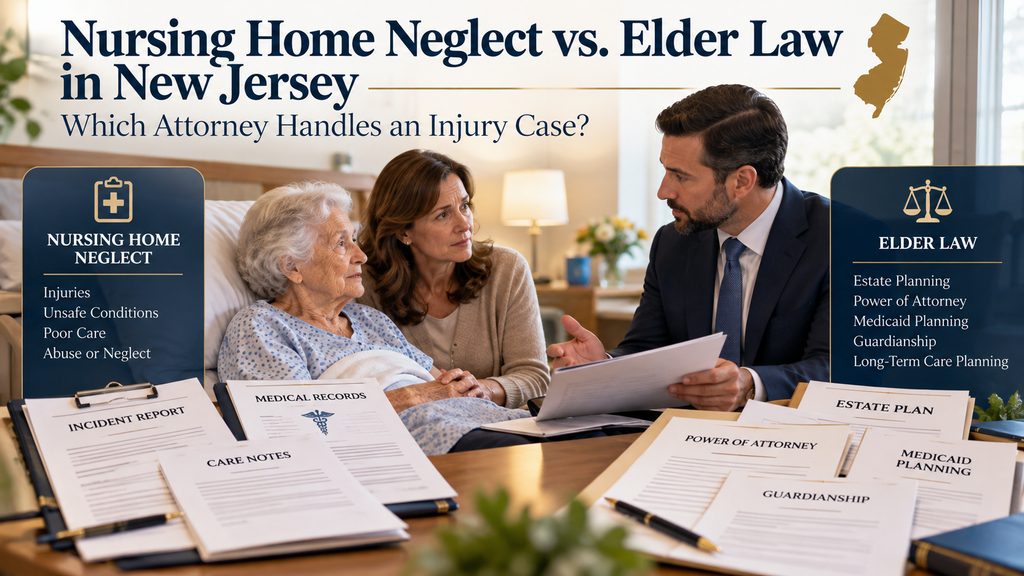
When an elderly loved one suffers an injury in a New Jersey nursing home, families often face difficult questions about what happened, whether the facility was negligent, and which type of attorney can help. Is the nursing home’s behavior at fault for the injury or neglect of a loved one? Did the nursing home facility fail to provide appropriate medical care to a resident? Does a family need an elder law attorney, a personal injury attorney, or a lawyer that specializes in cases of nursing home abuse?
Note that elder law and nursing home neglect law are two separate areas of practice to protect the elderly. Elder law is generally the practice of planning and managing finances, obtaining government benefits, and handling issues related to decision-making for the elderly. In contrast, nursing home neglect litigation involves issues of injury caused by negligence or abuse of the nursing home resident while he or she resided in a long-term care facility.
In general, it is important to know how the different types of cases that can arise at a nursing home are handled by attorneys when a loved one suffers a preventable injury such as bedsores, a broken bone, errors with medications, or dehydration at a long-term care facility.
Our nursing home neglect attorneys represent nursing home residents and family members in nursing home cases throughout New Jersey. We investigate abuse and neglect and seek compensation for our clients.
What Is the Difference Between Elder Law and Nursing Home Neglect Law?
Although these practice areas can overlap, they serve different purposes.
What Does an Elder Law Attorney Handle?
Elder law attorneys practice law to assist seniors and their families in a variety of legal matters. They work to protect their clients’ assets and attempt to ensure their clients receive the care they need through planning for their future needs.
Common elder law services include:
- Estate planning: Preparation of wills, trust agreements and other documents related to estate planning.
- Medicaid planning: Planning for persons who are eligible for long-term care and understanding financial eligibility requirements.
- Powers of attorney: Creation of a Power of Attorney to enable another to handle financial matters or sign legal documents on behalf of the individual.
- Guardianship: The process of obtaining court authorization for someone to manage the affairs of an adult who is unable to do so.
- Long-term care planning: Helping to evaluate legal and financial issues related to long-term care such as a move to a nursing home.
A senior law attorney can be of assistance in situations where a family is struggling to pay for a loved one’s nursing home care, handling the financial affairs of an aging parent, or dealing with issues related to an elderly person’s legal capacity.
However, not every elder law attorney handles personal injury suits against nursing homes.
What Does a Nursing Home Neglect Attorney Handle?
A nursing home neglect attorney practices nursing home neglect law, helping those whose loved ones have been neglected by a nursing home, long term care facility, hospital or other health care provider.
These cases may involve:
- Bedsores and pressure ulcers caused by the facility’s failure to reposition the resident regularly or to treat the sores properly.
- Falls causing hip fractures, head injuries, etc.
- Medication errors or failure to administer prescribed medication.
- Infections related to inadequate hygiene or wound care.
- Physical abuse or improper use of restraints.
- Delayed medical treatment or failure to respond to changes in resident condition(s).
- Wrongful death associated with negligent care.
A nursing home neglect attorney investigates whether a nursing home has violated its duties and caused harm to a resident.
Negligence, medical malpractice, violations of residents’ rights and other claims of neglect to residents of nursing homes can form the basis for a nursing home neglect attorney’s case.
When Does a Nursing Home Injury Become a Neglect Case in New Jersey?
Not every injury occurring in a nursing home establishes negligence.
For example, residents may have bed-bound or chair-bound geriatric conditions that present serious risk of injury even when proper care is given. However, it is the nursing home’s failure to give proper care that causes the injury for which the nursing home is liable for negligence.
An attorney generally evaluates whether:
- The facility or healthcare provider owed the resident a legal duty.
- The facility or healthcare provider failed to meet the appropriate standard of care or violated a protected right of the resident.
- That failure caused or contributed to the resident’s injury.
- The resident suffered legally recognizable harm.
For instance, consider a nursing home resident in Mercer County identified with a high risk of falling, whose care plan includes assistance by staff members for activities such as getting up from bed, but the staff fails to comply with the care plan on a regular basis.
If that resident suffered a fractured hip for example when he or she fell, that would be a good case to investigate for negligence.
Similarly, if a resident in a Cherry Hill nursing facility develops severe pressure ulcers because the staff failed to follow the facility’s repositioning schedule and proper wound care as set forth in the resident’s care plan, that could lead to a possible neglect action against the nursing home.
There is much more to establishing liability for negligence than simply the fact of injury. The proof required includes review of medical records, review of the care planned for the resident, information about staff, and expert opinion.
New Jersey Laws Protecting Nursing Home Residents
Residents in nursing homes in New Jersey have rights designed to keep them safe and healthy and to treat them with dignity.
The New Jersey Nursing Home Responsibilities and Rights of Residents Act, N.J.S.A. 30:13-1 et seq.
Among the other rights specified by the statute are the rights to be treated with dignity and privacy and to be free from mental and physical abuse, neglect, and exploitation. There are also civil remedies for violations of the rights of residents.
Federal regulations govern the nursing home care given to residents of homes that are Medicare and Medicaid certified.
Depending on the facts of a particular case, a claim may be asserted for:
- Violations of state nursing home residents’ rights.
- Negligent supervision or inadequate staffing.
- Failure to follow an individualized care plan.
- Medical or nursing malpractice.
We evaluate nursing home injury cases and determine the applicable legal claims and required evidence to prosecute a claim.
Common Nursing Home Injuries That May Require Legal Action
Falls and Broken Bones
Falls by nursing home residents cause a variety of serious injuries and can lead to long-term disability, including hip fractures and even traumatic brain injury. Fall assessment and fall prevention plans must be individualized to each nursing home resident, and nursing homes can be held liable for negligence, including failure to complete required fall assessments and failure to provide assistance and safety measures as required.
Bedsores and Pressure Ulcers
Pressure ulcers can develop in a nursing home resident who is unable to move for long periods of time. The development of a pressure injury is not always preventable, but the nursing home has a responsibility to assess risk, provide measures to prevent pressure ulcers, and treat any ulcer that develops. Pressure ulcers can become infected and may require a resident’s transfer to a hospital for treatment of the wound.
Medication Errors
Medication errors include the giving of wrong amounts of medicines and failure to give a medicine as ordered, as well as failure to administer medicines correctly and to monitor a resident for response to medicines given. Other healthcare providers, as well as the nursing home, may be at fault for errors of this type that result in serious injury.
Dehydration and Malnutrition
Residents who require assistance with eating and/or drinking need to have their nutritional and hydration status monitored by their caregivers. Neglect of a resident’s needs can result in preventable complications.
Neglect Resulting in Wrongful Death
Nursing home neglect and abuse can result in serious injury and even death. In wrongful death cases, there are claims for survival damages that are pursued by the estate of the decedent, and a wrongful death action for New Jersey beneficiaries. These types of cases require a thorough understanding of the medical facts and causation as well as the laws of New Jersey.
Nursing Home Neglect Cases in Trenton, Cherry Hill, Morristown, and Throughout New Jersey
Injuries occur in nursing homes throughout New Jersey, affecting families in large population centers as well as smaller communities.
Our nursing home abuse lawyers represent families and individuals throughout New Jersey, including those from the following communities:
- Mercer County
- Camden County
- Morris County
- Essex County
- Middlesex County
- Burlington County
- Monmouth County
New Jersey’s nursing homes are regulated by the New Jersey Department of Health which oversees all licensed nursing homes and other health care facilities. Families can report suspected neglect of a loved one to the state through the health department’s complaint process. Pellettieri Rabstein & Altman serves clients from its offices in Lawrence Township, Cherry Hill, Morristown and Nutley.
Whether your loved one was a resident of a nursing home in Mercer County, a skilled nursing facility near Trenton, a long-term care residence in Cherry Hill, or a nursing home in Northern New Jersey, you have the right to know the quality of care they received.
What Should You Do if You Suspect Nursing Home Neglect?
When families with loved ones in nursing homes discover unexplained injuries or notice that their loved one’s health is deteriorating, they need to act quickly to protect them.
First, ensure that your loved one is receiving proper medical care. If there is an immediate threat to a resident’s health and safety, call 911. Keep a log of all visible injuries as well as any significant decline in health. Take photographs, keep written notes with the date and time of each incident, and record conversations with staff members. Request copies of your loved one’s medical records, including any incident reports and their current care plan, through the proper channel of authorization. Keep a record of all correspondence with the facility, and do not alter any documents previously provided to you by the facility.
Families may also report concerns to the following New Jersey agencies:
- New Jersey Department of Health
- New Jersey Office of the Long-Term Care Ombudsman
The New Jersey Department of Health investigates complaints about licensed health care facilities. In contrast, the Office of the Long-Term Care Ombudsman advocates for residents of long-term care facilities. The Ombudsman is not an emergency contact.
Reporting neglect is intended to identify and correct situations where a resident is not being kept safe, but it does not automatically trigger a civil action to collect damages.
Your nursing home abuse attorney can help you gather the evidence needed to investigate your allegations of neglect and protect your rights to seek compensation for your injuries.
About New Jersey Nursing Home Neglect Attorney Steven J. Rogers Jr.
Steven J. Rogers Jr. is a partner in the law firm of Pellettieri Rabstein & Altman. He is a civil trial attorney practicing in the Personal Injury and Nursing Home Departments of the firm.
Steven Jr. represents individuals who have been injured in accidents and damages caused by negligence. This includes nursing home negligence, medical malpractice, wrongful death, assault and battery, automobile accidents and accidents that occur on premises. Steve earned his Bachelor of Science degree in Political Science from Kennesaw State University in 2014 and his J.D. from Rutgers Law School in 2017.
He was the recipient of the Dean’s Pro Bono Publico Award for his leadership in the Rutgers Voters’ Rights Project as well as for his other pro bono work while in law school. In addition, Rogers was a judicial law clerk for the Honorable Thomas J. Buck, J.S.C., in the Civil Division of the Middlesex County Superior Court.
Steven J. Rogers Jr. was a plaintiff’s attorney practicing complex personal injury cases prior to joining the law firm of Pellettieri Rabstein & Altman. He is admitted to practice in the State of New Jersey as well as in the Federal District Courts within that state.
Steven J. Rogers Jr. and Sherri L. Warfel of Pellettieri Rabstein & Altman were involved in the recent nursing home negligence appeal of Estate of Jean M. Early v. Englewood Hospital and Medical Center, et al.
Estate of Jean M. Early v. Englewood Hospital and Medical Center, et al. (Superior Court, Appellate Division, unpublished decision August 14, 2026). Issues on appeal included nursing home residents’ rights, sufficient medical evidence, causation and proper legal standards to apply. The trial court judgment under appeal was vacated and the matter remanded for a new trial on the reinstated claims under the Nursing Home Act.
The ruling from the Superior Court of New Jersey, Appellate Division, vacated the challenged verdict and remanded the matter for a new trial on the challenged claims filed by the Estate of Jean M. Early under the Nursing Home Act. The new trial will be conducted by a different judge.
What Compensation May Be Available in a New Jersey Nursing Home Neglect Case?
In most cases where a nursing home resident suffers an injury as a result of nursing home negligence, the resident may be able to receive compensation for his or her injury.
In addition to medical expenses and physical therapy, damages for pain and suffering as well as other applicable losses can be recovered. In the event of a wrongful death, additional damages can be pursued through a wrongful death claim as well as a survival claim.
Additionally, certain claims brought under the New Jersey Nursing Home Responsibilities and Rights of Residents Act may provide for statutory relief, including attorney’s fees. What a case is worth varies based on the extent of the injury and resulting loss, the extent of negligence, causation, the nature and amount of damages for which the defendant is responsible, and other relevant factors.
A Nursing Home Wrongful Death Settlement
We settled a nursing home wrongful death case for $750,000 plus costs in a matter where our client’s decedent suffered from the negligent deprivation of necessary medication, resulting in death.
This case settled for $750,000 before going to trial. PR&A secured a $750,000 settlement before trial in a nursing home wrongful death case involving the negligent failure to administer necessary medication.
The failure to properly administer a resident’s medication can give rise to serious claims in nursing home neglect cases. The following case result is an example of such a claim. Note, however, that prior case results do not guarantee similar results in future cases; each case is unique.
Frequently Asked Questions About Nursing Home Neglect and Elder Law in New Jersey
Q: Is a nursing home neglect lawyer the same as an elder law attorney?
A: While there are some elder law attorneys who also handle neglect cases, the vast majority of nursing home abuse and neglect lawyers focus entirely on representing families in injury cases against nursing homes and other healthcare providers.
Keep in mind that not all attorneys practice both elder law and nursing home injury law. It is best to ask the attorney specifically if he or she handles nursing home injury cases and has experience litigating such cases.
Q: Should I hire an elder law attorney if my parents fall in a nursing home?
A: If your loved one has suffered a serious fall and you suspect that issues with supervision, care, or the environment caused their injuries, you should consider speaking with a nursing home neglect attorney.
An elder law attorney may also be necessary to address issues of guardianship or other matters related to the elderly in the nursing home.
Q: Can a nursing home be sued for bedsores in New Jersey?
A: Yes. Depending on the circumstances, a nursing home can be held liable for bedsores, including cases where the sores have worsened due to negligence.
An attorney will generally go through a nursing home’s repositioning schedules, wound care plans and treatment, medical evaluations of pressure ulcers and corresponding reports, information regarding the nursing home’s staffing and the plans of care for the resident in question in order to determine whether the applicable standard of care was met by the nursing home.
Q: Can family members file a nursing home neglect lawsuit on behalf of a resident?
A: Sometimes. Whether family members can sue a nursing home depends on several factors including the resident’s capacity, the individual’s legal authority to act on the resident’s behalf and the type of claim being pursued.
This does not necessarily mean that any family member can file a lawsuit on behalf of the resident, as there are many circumstances where only a legally authorized representative (e.g., a guardian, conservator, or designated agent under a valid healthcare power of attorney) can act.
Q: Does nursing home neglect count as medical malpractice?
A: Not necessarily. Negligent acts by nursing home staff can give rise to claims of ordinary negligence, medical malpractice, or claims based upon violations of certain statutes.
For example, failure to provide a resident with needed hygiene or assistance with activities of daily living may give rise to an ordinary negligence claim, whereas poor medical care caused by a licensed healthcare professional’s negligence may give rise to a medical malpractice claim.
Q: Can I sue a New Jersey nursing home for medication errors?
A: Yes. Depending on the facts of your case, the nursing home or another healthcare provider may be responsible for your loved one’s injury or death due to a medication error.
An attorney would review the medication administration records as well as the orders of the resident’s physician, comparing them to the actions of the nursing home staff to determine how that error caused harm to the resident.
Contact a New Jersey Nursing Home Neglect Attorney at Pellettieri Rabstein & Altman
When a loved one is injured in a nursing home, choosing the right attorney to handle your case can be critical.
Elder law attorneys handle issues like guardianship, Medicaid and long-term care planning. Severe injury to a nursing home resident requires the experience of an attorney handling cases of negligence, personal injury, medical malpractice and residents’ rights’ abuse in nursing home neglect cases.
Our attorneys are familiar with the issues that often face families of elderly individuals who have been subjected to suspected neglect in nursing homes. We review the situation and investigate the nursing home’s actions to determine whether there was any neglect or abuse. We then explain the legal rights of the neglected individual and options available to them.
Whether your loved one fell, suffered from pressure sores, suffered from side effects of medication, or experienced any other type of neglect or abuse in a nursing home in Trenton, Cherry Hill, Morristown or Newark, NJ, our team can review your case for free. Simply fill out the online form to request a free nursing home neglect case review.


